
Latest Posts

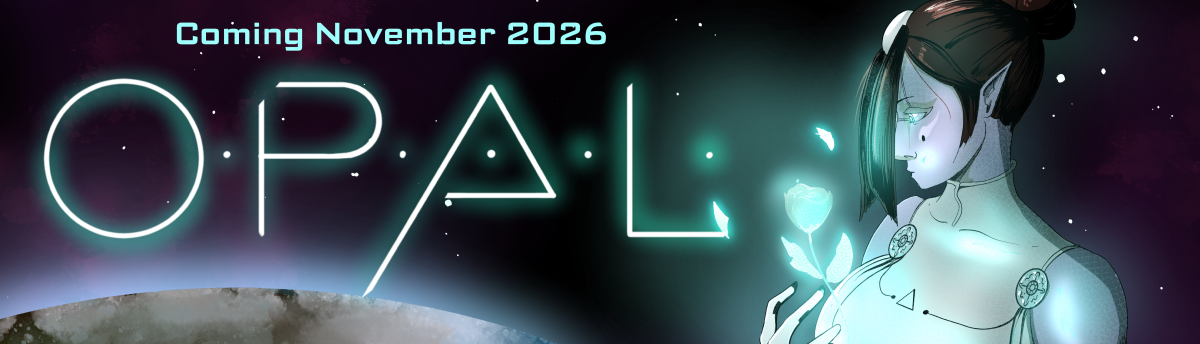
OPAL Coming Nov 3rd 2026

Greetings my mighty loyalist,

  • OPAL Debuts next week!

  • Capturing Bigfoot


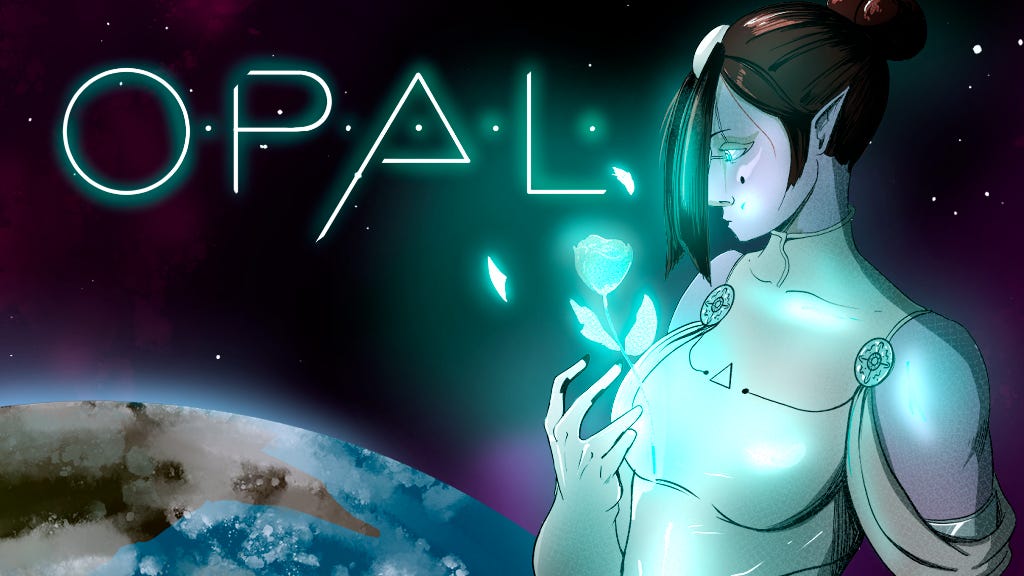
A new chapter is under way for American Demon Comics. The new title OPAL is finally debuting next month. I plan to run updates for 2 or 3 months. This story goes way back in regards of my fascination with UFO’s.

Disclosing my own self, I always was interested in the topic. I watched all those lame documentaries in the early 2000’s and I gradually kind of forgot. I became enthralled with fantasy games and sci-fi anime. Well, at some point around 2015 or 2017, I listened to an interview on JRE with someone like James Fox and my interest was reignited. I consumed any podcast I could about the subject. Along side this, I listened to philosophy, theories of consciousness, and what it may mean to have synchronicities.

You can see something forming here, yes? To be fair, OPAL as a comic story is a new concept for myself. I have more titles to make that are in lieu of high fantasy, swords and poltics, and like Envy, demonic and magical. So this is how OPAL stands out among the American Demon brand. A sci-fi combination of modern alien/UAP theory with my own spins of course.

Capturing Bigfoot

So. I held a watch part for the controversial documentary, Capturing Bigfoot. It went well, and it was a lot of fun to see with friends. GHPR team lead Scott Pelzer joined us on this night, so both of us watched and could talk in real time how this documentary was panning out to us.

This documentary was shocking to say the least. I know that comes with many documentary claims, but this one was truly incredible. I am going to give you some notes from the PhasmoCast episode were we go into a deep dive on our thoughts about Capturing Bigfoot so that you get an idea of where this is going.

So the documentary Capturing Bigfoot was officially released on October 20th, Bigfoot day, of 2026 marking the 59th anniversary of the Patterson/Gimlin footage. This documentary introduced a completely new element in the story of the original Patterson Gimlin footage. I am about to go into some detail about this documentary and if you have not watched it yet, I highly advise going to watch it before joining us in this discussion. The documentary highlights the family and business turmoil that haunted everyone involved these long years after the release. It brings on many third parties such as Jeff Muldrum, Greg Long, Bill Munns, Larry Lund, and many of the family members, close and distant. All this to say it is a great documentary and holds a lot of context we may not be noting tonight.

  • Podcast Notes 10/26/26 PhasmoCast Episode 9 – SkeptiCast

So join us next Monday as we talk in detail the implications and thoughts on Capturing Bigfoot. You may have to rent or buy it on Amazon video.

Thank you all for reading.

Website

Subscribe now

Share

What did he know? David Grusch on the JRE

Greetings my mighty loyalist,

  • Going over the David Grusch Interview

  • Still Live on FMC


David Grusch has entered the UAP sphere quite abruptly over the course of the last 4-ish years. If you do not know.

David Grusch is a former U.S. Air Force intelligence officer and Pentagon whistleblower who publicly claimed that the U.S. government holds recovered non-human spacecraft and biological remains.
–https://en.wikipedia.org/wiki/David_Grusch_UFO_whistleblower_claims

October 1st was his second appearance on the JRE. Here, I believe, he dispenses much more about what he has been shown regarding the UAP situation. As you know, I am an avid follower of everything I can find regarding the topic. Even if I remain skeptical of Grusch and similar Government heads, I find them to be important avenues of lies and half truths. But that is just it. Half truths of what Eric Weinstein calls “the lump under the rug”. Something is there, and I want to know about it.

Check out the episode above for more regarding our take on this JRE interview.

Fund My Comic

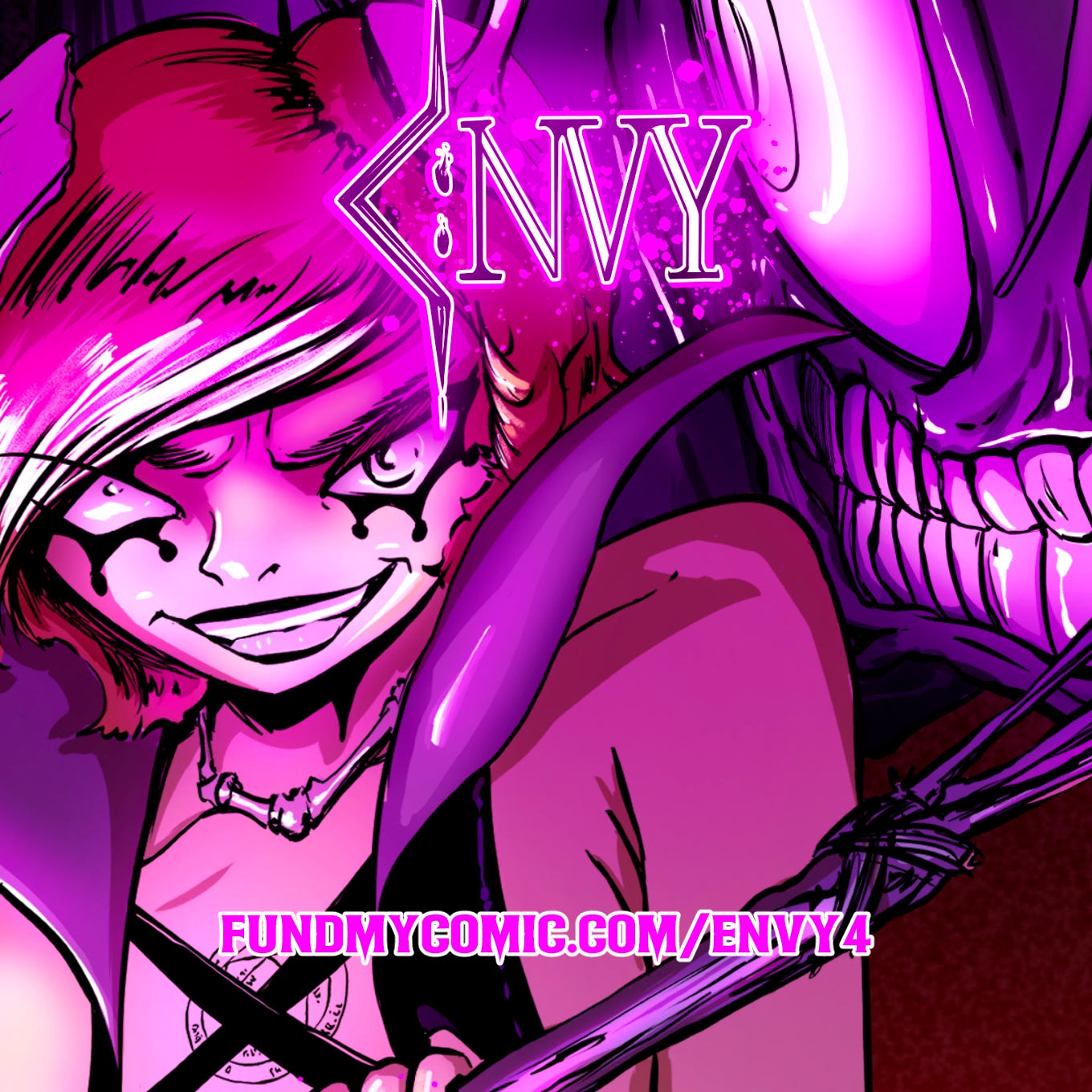
Envy is still live for a limited time on Fund My Comic! So go over and get your copy while you still can!

Envy on FMC

Thank you all for reading.
Website

Subscribe now

Share

The Block Universe and Rich Hoffman

Greetings my mighty loyalist,

  • New Phasmocast Episode

  • Meeting Rich Hoffman

  • Fund My Comic


Time is a natural thing to consider hacking. Many questions are derived from the idea of going back and doing things differently or traversing further into places you only wish you could see before and after you. But what if you already are?

In this episode we think about what time may be like according to the Block Universe and similar considerations originally brought to my attention by Eric Wargo. So check it out above! or at any platform here!

Phasmocast

Rich Hoffman

There are few things I recall from my early life, long gone it feels. One I remember very starkly, though, is MUFON. The Mutual UFO Network. This was something dropped regularly in those early UFO documentaries I used to ingest. So suffice it to say I was very honored to meet the head director and original organizer of the network, Rich Hoffman.


Scott Pelzer (Lead Investigator and coordinator of GHPR), Rich Hoffman (Director of MUFON and a part of the series The Proof is Out There), and myself.

“Rich Hoffman has over 54 years of experience investigating and researching the UFO subject. He has served as Director of Investigations, Star Team Manager and Director of Strategic Projects, as well as the State Director of MUFON and worked with numerous organizations.” https://www.explorescu.org/rich-hoffman

He resides in Huntsville now working closely with the arsenal. The University of Alabama in Huntsville has a radio station, WHLR, and they held a gathering for all of us weirdos as their program Curiosity Squad held it’s first anniversary. So by chance we got to meet. We really enjoyed our conversations with him and he seemed to like us. Yes we will be trying to do a interview in the near future.

Envy on Fund My Comic

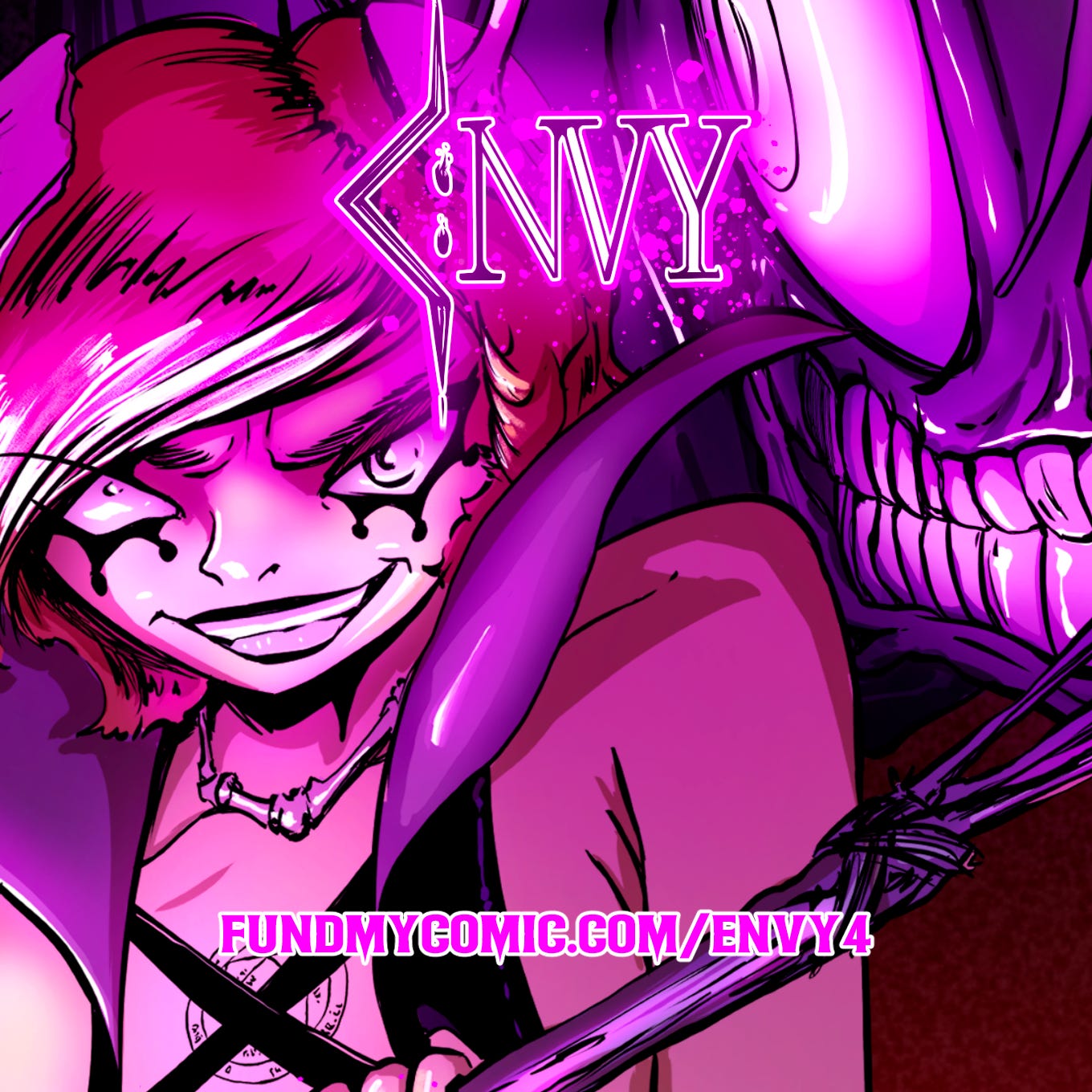
Don’t forget, Envy is currently running on Fund My Comic. If you missed out on getting yourself a copy, you can now for a LIMITED TIME online. This book has already been printed, and pledging will still garauntee yourself a copy regardless of the goal set there.

So what are you waiting for? Become a true part of the Legion.

https://www.fundmycomic.com/Envy4

Thank you all for reading.

Website

Subscribe now

Share

Your copy of Envy is waiting.

Greetings my mighty loyalist,

  • Envy issue 4 is LIVE on FundMyComic!

  • OPAL coming November 2026


Your next opportunity to collect Envy is available NOW! Just like with kickstarter, there are tiers for

  • Digital collectors

  • Physical collectors

  • Full comic collection

  • The limited Gold foil variant cover

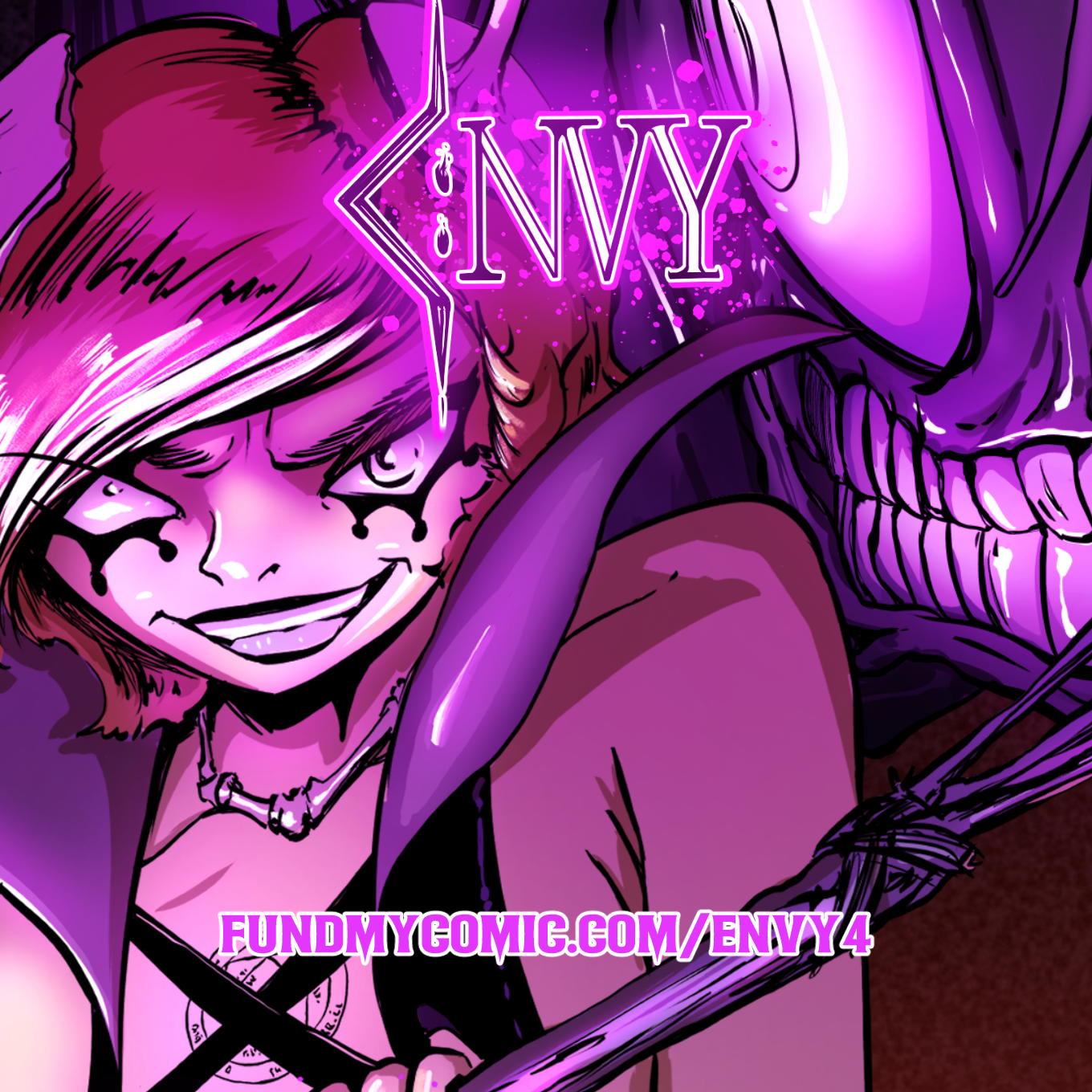
So head over to FundMyComic.com/Envy4 to back now!

O.P.A.L.

Next month is the first episode of OPAL. I am so excited, and I have actually begun to get a nice rhythm making both it and Envy. So you’ll likely be receiving double the fun in American Demon Comics.

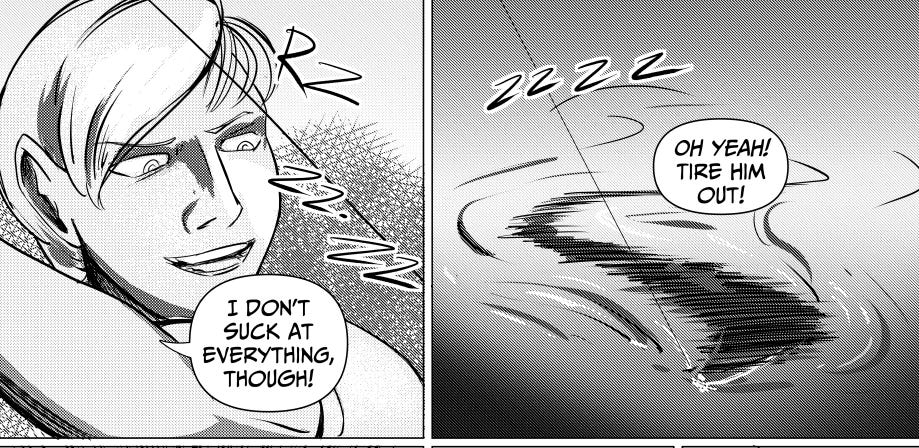
My Patreon is still up to follow, but because there have been few moving there to follow for free, I will not be making it an early access. So initial web versions will be free to read as usual! Check out these previews!

Thank you all for reading!

Website

Subscribe now

Share

Your next chance is coming.

Greetings my mighty loyalist,

  • I am launching issue 4 on Fund My Comic!

  • Phasmocast Episode 2 releases Tomorrow!


You may have joined the legion recently. There’s a also a chance that you like my comic but did not or could not purchase it at the convention. Maybe you just got Issue 1 and wanted to follow up on getting all the copies. Maybe you just got a little confused about the kickstarter. Whatever the case may be, issue 4 will be going back up onto Fundmycomic NEXT WEEK! I’ll provide an official launch day post and you will simply follow the link.

As I mentioned before, life has been coming at me in droves and will continue to do so. However, Scott and I continue to record and Phasmocast will be making it’s return tomorrow! So be sure to follow us on Spotify or Youtube!

Website

Subscribe now

Share

And It don’t stop coming

Greetings my mighty loyalist,

  • Just moved into a new apartment.

  • October is looking rough for making comics.

  • Creation is still happening


brown leafless tree on green grass field during daytime

Photo by Dan Loftus on Unsplash

We just got done moving and all the headache that comes with that. So there is still a ton to unpack and get ready for the season. This also has called for a purge of some furniture and a need for others. We currently don’t have internet, so recording and editing the podcast won’t be back up until next week.

The October schedule is cooked. There are no free weekends between a pageant, taking kids out, parties, markets, and so on. It’s going to be a blast, but also exhausting for a person like me.

All that outside of work, and now inside it, I have 3 recurring training clients, my illustrator position at Courage over Comfort, and general desk duties. I’ll be doing my best to keep comic production up and releasing in November.

All of this is like a slow incoming check-list that is just simmering in my brain until it’s all done and it’s never all done. I hate it because im trying to do them all “right” and it can make it difficult to enjoy the moments.

But thank you all for your patience and reading.

Subscribe now

Share

Website

PhasmoCast Episode 1

Greetings my mighty loyalist,

  • The first episode of PhasmoCast is out!


While work continues behind the scenes, Scott and I have officially released the first episode of PhasmoCast. You can watch it now or listen here on Spotify. The second episode is already recorded and I’ll be getting it ready in the coming days.

That being said, doing a couple of these episodes has me realizing that my recall of names, dates, and events may be very skewed and some preliminary research to make sure those things remain accurate is in order. That on top of some minor editing may prove for this to me more taxing than previously thought. That’s not to say it’ll go away, but I may back the releases up two every other week or maybe once a month.

That being said, go ahead and enjoy episode 1!

Also, I am gearing up to launch OPAL on Patreon in November, so be sure to click the OPAL banner above to sign up as a free member You’ll be first to get notified about the release and consider supporting all this work there. You’ll get insider looks and early access to releasing episodes.

Thank you all so much for reading!

Subscribe now

Share

Website

Phasmocast

Greetings my mighty loyalist,

  • New Podcast


I’m very happy to announce the launch of a new podcast that will begin next week! I will be sharing the hosting with my good friend Scott Pelzer of HSV Para, or also my boss in the investigation world. He probably wouldn’t consider himself one, but that’s essentially what-he-be. But we’re both the boss on this show, and it’s been of high priority to us to kick this off.

Obviously, this podcast is going to focus on everything around high strangeness, insights to our upcoming and previous investigations, and what this may wield for that same realm in fiction. We’ll also be having guests, friends, and jokes a plenty. So if that sounds fun to you, we’re gonna hit the ground running next week recording on Monday and my plan is have it edited and released by the following Thursday. We’ll be on YouTube, spottily, and substack. Due to this learning curve, all that is subject to some shifts and morphs, but it will be here!

Thank you so much for reading!

Share

Subscribe now

Website

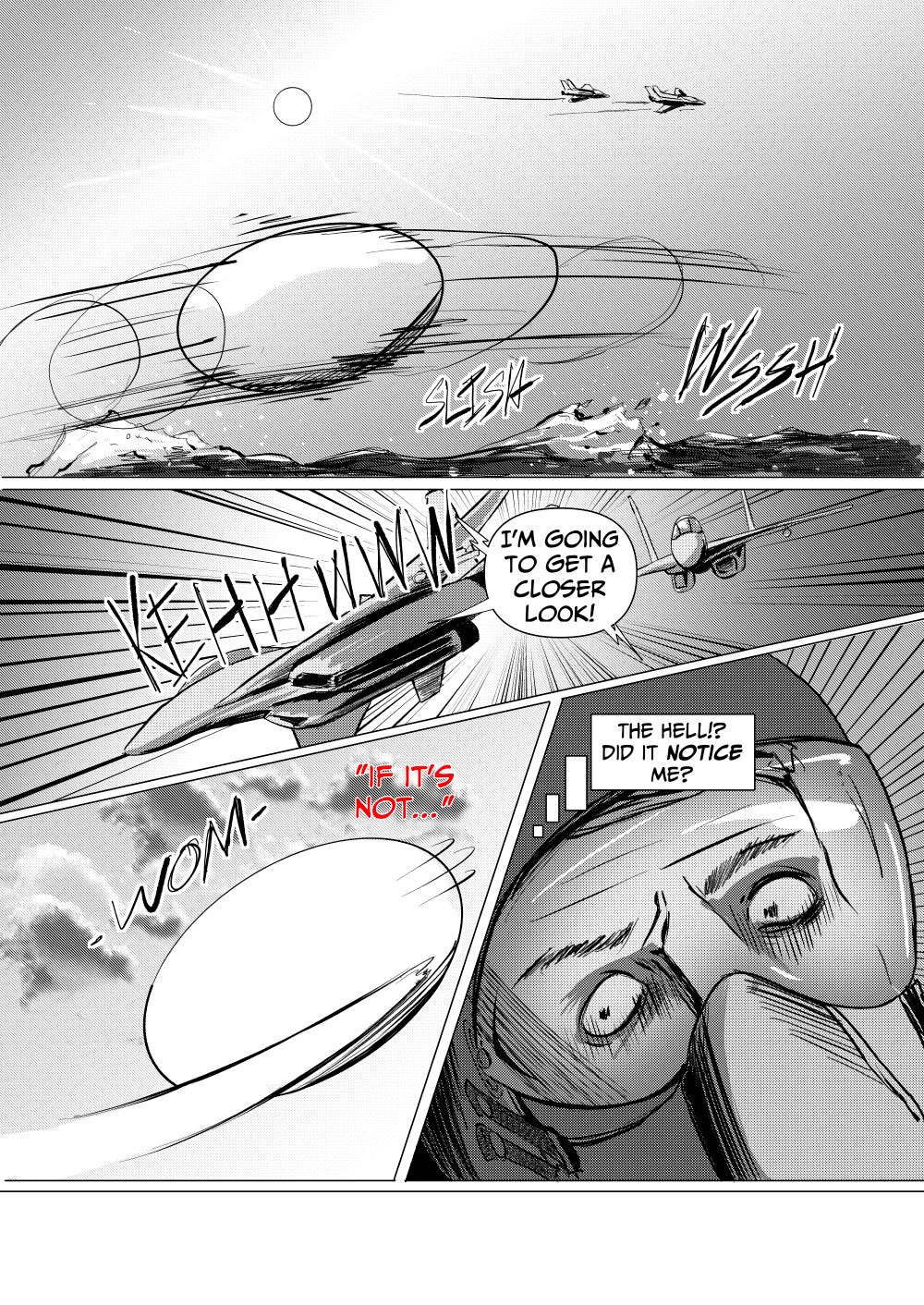
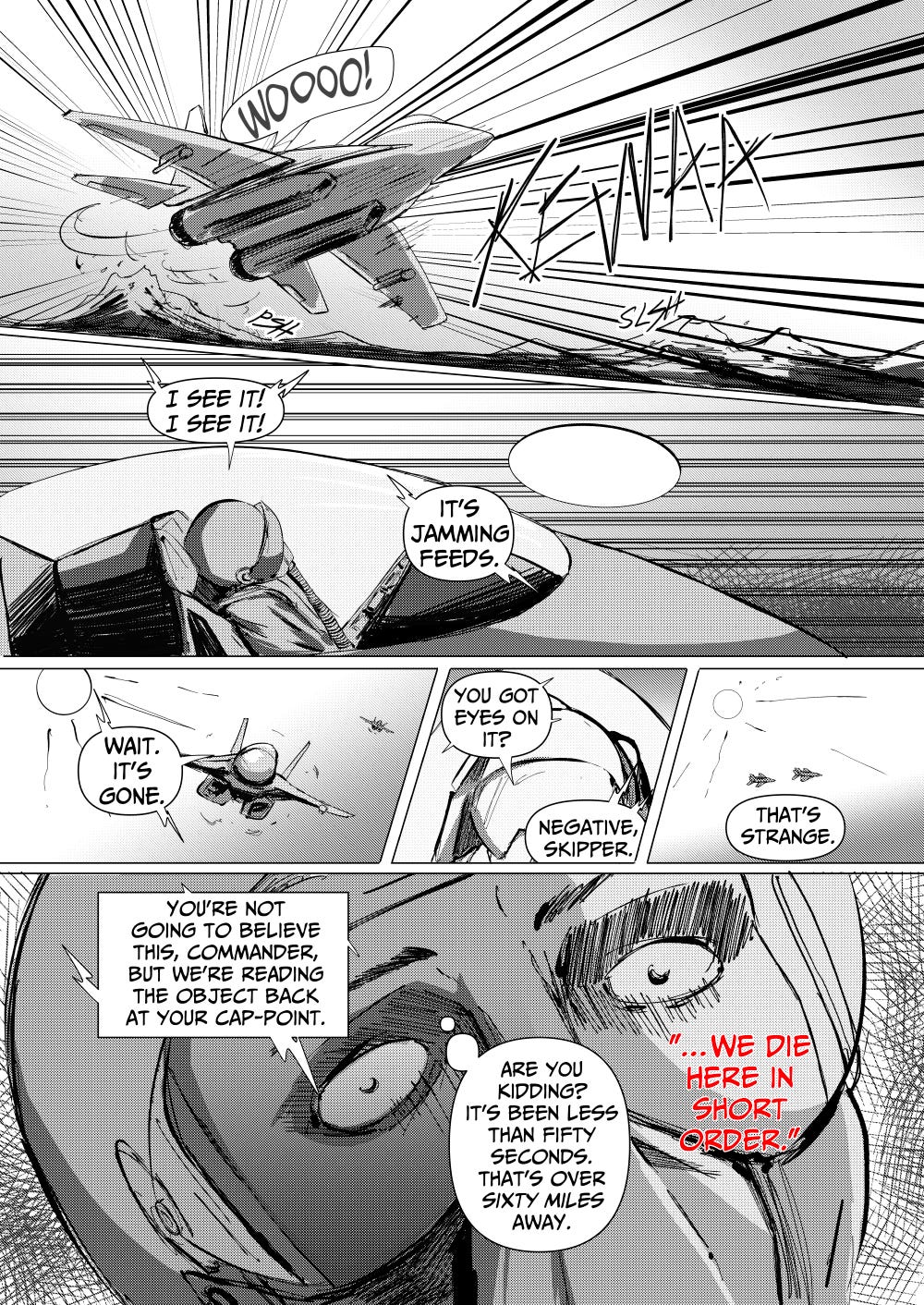
OPAL

Greetings my mighty loyalist,

  • What I’ve been working on.

  • Intro Pages


It’s happening! My next passion project is under construction. I’m about 8 chapters into writing with chapter 1 pages in production. I couldn’t be more satisfied. (maybe ill think the same thing in a year.)

OPAL is about confronting the impossible and saying let’s fucking do that.

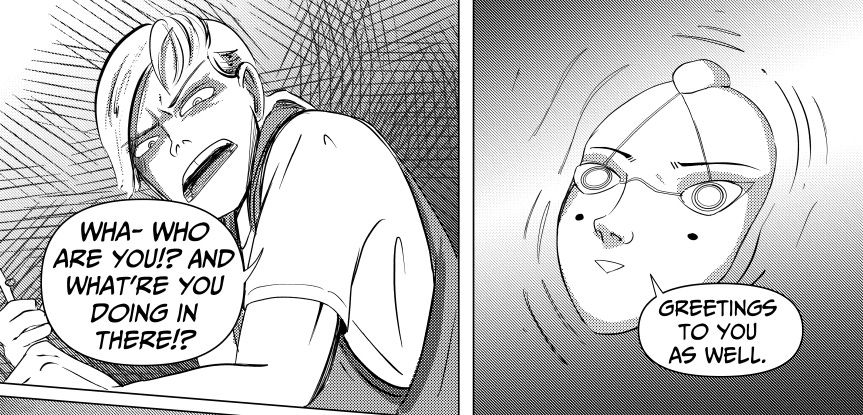
An entity from the stars lands giving an FBI agent straight out of the 90s a deadline for Earth, but also the knowledge that humanity can fix it. They are under no illusion that your regular means of disclosure are actually roadblocks. They must navigate, in this sci-fi mystery adventure, how to get humanity to the stars.

This is a lot like, Steins;Gate, Death Note, The X-Files.

The age of disclosure is not the alien they say it is.

Chapter 1 coming November 2026.

NIMITZ

Thank you all so much for reading.

Leave a comment

Subscribe now

Share

  • WordPress.org blog: WordPress 7.1.4

    This security release features fixes for multiple issues. Because this is a security release, it is recommended that you update your sites immediately. You can download WordPress 7.1.4 from WordPress.org, or visit your WordPress Dashboard, click “Updates”, and then click “Update Now”. If you have sites that support automatic background updates, the update process will begin automatically.WordPress 7.1.4 is a short-cycle release. The next major release will be version 7.2, currently planned for December 8th. For more information, please visit the WordPress 7.1.4 HelpHub site. Security updates included in this release The security team would like to thank the following people and organizations for responsibly reporting vulnerabilities, and allowing them to be fixed in this release: A weakness in the WordPress upgrade process which can lead to remote code execution during the upgrade window, reported by Umut Bayram. A stored XSS with specially crafted block markup, reported by Rafie Muhammad (Awesome Motive, Inc.). Privacy Data Removal Requests can be created in a way that leads to stored XSS, reported by Anthropic. Multiple stored XSS issues in the Interactivity API independently discovered by AnC and DatNLQ from VietSunshine Cyber Security, rekter0 and Anas cherni, Marcel Karlsson (whoismarcel), and Weston Ruter, Jon Surrell, Alex Concha, and Luis Herranz of the WordPress Security Team. A stored denial of service issue in the Interactivity API, reported by Jon Surrell of the WordPress Security Team. A stored XSS in Customizer selective refresh, reported by Rafie Muhammad (Awesome Motive, Inc.). A Stored XSS in the Categories block reported by Ben Bidner of the WordPress Security Team. Specially crafted User Logins can lead to a stored XSS reported by Anthropic. Unpublished customizer changesets can be discovered by unauthenticated users, reported by Antonio Lorensius Silaban. A Stored XSS in Playlist and image blocks, reported by Ben Bidner of the WordPress Security Team. Stored XSS in core/comments-pagination-next and core/comments-pagination-previous blocks, reported by Alex Concha of the WordPress Security Team. Notes can be read by privileged users that lack access to edit the post the note is attached to, reported by Ramon of the WordPress Security Team. An update to the bundled root certificates due to the eMudhra revocation. Thank you to these WordPress contributors This release was led by Aaron Jorbin and Nik Tsekouras. WordPress 7.1.4 would not have been possible without the contributions of the following people: Aaron Jorbin, Adam Silverstein, Alex Concha, Andrew Duthie, Andrew Serong, David Arenas, Dennis Snell, Ella Van Durpe, George Mamadashvili, Isabel Brison, Jake Spurlock, Jb Audras, Jeremy Felt, John Blackbourn, Jon Surrell, Jonathan Desrosiers, Kira Song,Lance Willett, luisherranz, Marco Ciampini, marcs0h, Marin Atanasov, Mario Santos, Miguel Fonseca, Nik Tsekouras, Peter Wilson, ramonopoly, Rudy Faile, umut3806, Weston Ruter Backports As a courtesy, the security fixes were backported to all branches eligible to receive security fixes (currently through 4.7). As a reminder, only the most recent version of WordPress is actively supported. The backports are in progress and will ship as they become ready. WordPress 7.2 Beta 3 has also been released, containing all applicable fixes.

  • #239 – Remkus De Vries on How Scanfully 2.0 Is Making WordPress Security and Performance Monitoring Simpler

    Today the podcast is focused on Scanfully, a WordPress site health and performance monitoring tool, detailing its evolution to version 2.0. We talk about how the tool is making complex site data accessible and actionable for users of all skill levels, from freelancers to agencies and hosts. We explored new features, including a public API, improved dashboards, human-readable alerts, and an MCP for AI-powered queries. Upcoming add-ons like WooCommerce checkout and form monitoring also got a mention, with emphasis on proactive site management and the importance of community-driven skill development in the WordPress ecosystem.

  • WPTavern: #239 – Remkus De Vries on How Scanfully 2.0 Is Making WordPress Security and Performance Monitoring Simpler

    Transcript [00:00:19] Nathan Wrigley: Welcome to the Jukebox podcast from WP Tavern. My name is Nathan Wrigley. Jukebox is a podcast which is dedicated to all things WordPress. The people, the events, the plugins, the blocks, the themes, and in this case how Scanfully 2.0 is making WordPress security and performance monitoring simpler. If you’d like to subscribe to the podcast, you can do that by searching for WP Tavern in your podcast player of choice, or by going to wptavern.com/feed/podcast, and you can copy that URL into most podcast players. If you have a topic that you’d like us to feature on the podcast, I’m keen to hear from you and hopefully get you, or your idea, featured on the show. Head to wptavern.com/contact/jukebox, and use the form there. So on the podcast today we have Remkus de Vries. Remkus has been active in the WordPress space for over 20 years, starting out with his own agency focused on high performance, scalable WordPress websites. Over time he has diversified into education and community building with projects like WithinWP, and a new initiative, The Guild, which is a paid community aimed at helping people build smarter, more performance, sites through a first principles approach. Our conversation centres on Scanfully, a site health and monitoring SaaS Remkus co-founded, which recently hit version 2.0. Scanfully’s focus is giving users meaningful, actionable, insights into WordPress site, health, security performance, email, deliverability, DNS, and more. Packing all this data into an easy to understand dashboard. We talk about Remkus’ motivation for diving deep into the complexities of WordPress monitoring, and why many users struggle to keep on top of the technical side of their websites. Remkus argues that too many site owners are stuck in a reactive mode, only investigating issues once something breaks. And Scanfully aims to change that mindset by making ongoing health checks accessible and easy to parse, even for the spreadsheet averse. Remkus walks us through the products evolution, including the 2.0 update that aimed to reimagine their dashboard experience, added public APIs, and introduced tools like MCP AI integration, empowering users to query their sites health conversationally. We also get into recent and upcoming features such as WooCommerce checkout monitoring, activity logs, and future add-ons designed to cover forms and other business critical flows. If you manage multiple WordPress sites, run an agency or are simply interested in building more robust futureproof WordPress projects, this episode is for you. If you’re interested in finding out more, you can find all of the links in the show notes by heading to wptavern.com/podcast, where you can find all the other episodes as well. And so without further delay, I bring you Remkus de Vries. I’m joined on the podcast by Remkus de Vries. Hello, Remkus. [00:03:29] Remkus: Hello, Nathan. [00:03:30] Nathan Wrigley: It’s been a while. Remkus and I have been on many calls in the last few days and weeks. We’re going to have today about a project that Remkus has been actively involved in for a number of years. It’s called Scanfully. We’ve reached version, I’m going to say 2.0, let’s go with that. [00:03:46] Remkus: Yeah. Yeah. Yeah. [00:03:47] Nathan Wrigley: But over the last few days it’s actually advanced a little beyond that. So that’s going to be the main focus. I would probably urge listeners to this podcast. If you want to understand what the product is and how it works, maybe press pause. Go to Scanfully.com, so scanfully.com, and then come back and you’ll understand fully what the product is. Before we get stuck into updates and product and what it all does. Very briefly, Remkus, do you want to just tell us a little bit about you, your backstory, WordPress space, that kind of thing? [00:04:17] Remkus: Yeah, sure. Been in the WordPress space, active, 20 plus years now. Started with an agency, very quickly moved into complex performance scaling, more complicated type of sites. Ran a niche agency like that for a very long time. In the last couple of years I’ve been doing some diversification. I have withinwp, which is a WordPress, how do I explain this? Because this is also in transit, but it’s a podcast, it’s a newsletter. One that’s being cited by This Week in WordPress a lot, I should say. And part of it is the educational side, which is the part that I’m building out currently. And what I mean with educational side, that I’m preparing a community, a paid community, that has the sole goal to help you better understand WordPress and build better sites, smarter sites, more performance sites, that sort of stuff. Basic first principles type approach. And that is roughly how I look at WordPress. And Scanfully is something I started with my co-founder Barry, let’s call it three years ago. And from a similar angle, we want to solve, essentially site health and performance monitoring tool of your WordPress site in the broadest sense of the word. Meaning the word Scanfully is literal. We scan fully and what we’re not scanning fully currently, we will be. [00:05:32] Nathan Wrigley: Okay. Thank you. Can I ask a question? May touch on your personality, I guess. All those years ago, 20 plus years when you came into WordPress. How can you explain why you delved into this bit? Because there were so many ways that you could have gone, but you’ve really made scanning, and site health, and monitoring and performance, that is your thing. Is there a bit of that which, speaks to you on some level? Do you find yourself drawn in that direction, no matter where you look on the internet? [00:05:58] Remkus: Yeah. [00:05:59] Nathan Wrigley: Do you enjoy data analytics, spreadsheets, numbers, all of that? [00:06:03] Remkus: I wouldn’t call it enjoy, but, I’ve always been good at it. I always found it fun to some degree. But in general, I get bored quite easily. If I’m to stick with a topic, it needs to be the complicated version of a topic. To me, in web development, that quickly revolves around all the things that make a WordPress site more tricky to scale, or more tricky to make fast, or more tricky to fill in the blank. There’s tonnes of different subtopics to that. [00:06:25] Nathan Wrigley: Yeah. [00:06:26] Remkus: And that then gives you a different view of what is important. And Scanfully is one of the answers to that. we. See that there’s, I think the whole industry is levelling up in a way. I don’t think it’s happening fast enough, but part of it forces you to start thinking about things in a more professional way, like more preemptively understanding what is something that’s going on. What is a trend on your site? What do you see happening? And I think we’re still too much on the reactive side of things. So if my side is down, or if somebody complains it’s slow, then I’ll have a look. And we want to change that awareness and make it one of your first thoughts instead of an afterthought. [00:07:02] Nathan Wrigley: It’s a curious thing then that the complexity which you enjoy, in a sense, you require other people to not enjoy it as much as you, in order for you to have a product. And I am one of those people. If you present me with a, I don’t know, a Google Analytics dashboard, or a spreadsheet which goes beyond about four rows, then I quickly lose interest. I genuinely can’t maintain my effort over there. I glaze over and don’t enjoy it. And so part of the problem with dealing with WordPress is getting over that hump. Maintaining the interest in an area that I feel ill-equipped, not just ill-equipped, completely out of my depth. And so having tooling, the likes of which you’ve built with Scanfully enables people like me to actually stand back and go, okay, that complicated thing is made more easy. I can actually start to understand it in real terms, with data and charts that are less overwhelming. And I guess that’s the point. [00:07:53] Remkus: That is the point, and that is essentially also the driver, why we went from dashboard version 1.x to now, 2.x. Because it’s very easy when you’re on the more technical side of things and you kind of understand what the signal is and what it’s implying to forget what the person who doesn’t understand the extra layers and the assumptions that go underneath. Like what does that actually mean? The 2.0 rebrand. Because it’s not a rebrand in terms of what we do, but it’s a rebrand and how we interpret every single version of the monitoring metrics that we collect, how we present it, and what we allow you to do with it. Everything has been rethought. It’s been a, I think in total, we’ve had about four or five months of just working with a redesign. And we call it a redesign because it is, because it visually looks different. We’ve got all this feedback of how people are using it. And a common theme was, we’re missing this, we’re missing that. Could you make that easier? So we were like, okay, that’s a lot of stuff pointing in the same direction. Why don’t we start rethinking how we’re going about helping you figure this out? And I’ll give you a very concrete example. So if a site goes down, because we have an uptime monitoring, you get a notification. But if it’s the server that goes down and you have 25 sites on that server, it doesn’t make a lot of sense for you to receive 25 emails. [00:09:05] Nathan Wrigley: No. [00:09:06] Remkus: So gathering information per monitoring alert is something we’re doing now. And, the same goes for if there’s, I don’t know, if the latest plugin you’re using on all of your sites has something that needs to be fixed, or something that is already fixed. So let’s assume there’s a security release for it. You don’t need to know that 25 emails. You need to know there’s one email, and these are the sites that are affected. But you also want to know, is this a high risk? Is this a medium risk? Is this a low risk? Because there’s plenty of security stuff that is so close to impossible to replicate that, do I need to act right now? Maybe, but we give you the insight that you can act upon it. Like it’s not, we’re not forcing you to pay all the attention all the time. And it’s things like that. So we had the data already, but the question then becomes, how do we make this digestible? How does this become a signal, versus the noise that it’s also is? So that’s a lot of rethinking. That’s a lot of rethinking in what is valuable to share, and how is it valuable to share and what are the things you would like to do with certain things? So, an example, related to that is what if there is an update available for a plugin that you’re using in a few places? But there’s no fix yet. Do we need to send you every single day that there is a security update? Or there’s a security issue? Probably not. So why don’t we allow you to snooze a particular alert? It’s simple things like that. And I say simple. It’s not simple to implement, but. [00:10:27] Nathan Wrigley: Simple on the front end. [00:10:28] Remkus: Yeah. Simple for you as an end user. So that was a lot of thinking and figuring out how do we make this more pleasurable, for as pleasurable as the topic itself is. [00:10:39] Nathan Wrigley: I’m going to circle back to the product in a moment, but I’m going to ask you a curious question. [00:10:43] Remkus: Yep. [00:10:43] Nathan Wrigley: You may balk at this question and think, okay, that’s unusual and a bit weird. Is the WordPress space for you quite an exasperating thing. And what I mean by that is, you are obviously steeped in this knowledge, about how things can go wrong, and how a poor implementation of something over here can have catastrophic effects over there. Given enough time, and the stars aligning in a certain way. I don’t know how to describe this. Does that mean that everywhere you look, you just see catastrophe and problems. And you open up a WordPress website, you’ve got a new client or somebody’s onboarded you with the plugin. You look inside and you sort of face plant, head slap. Okay. All the stuff that I know, which is second nature to me. Why don’t they all know this? There’s no question there, but can you see what I’m trying to. [00:11:27] Remkus: Yeah. Yeah, I can. You’re not recording the video. The people listening didn’t see me nod along the way of what you were saying, but yes. If you understand things. So there’s a principle called first principles. Which means everything we approach, we should approach from the first principles. Like what is the base layer of where to solve problems. And, this is not even just WordPress, this is life, I guess. But there’s a big tendency for people to look at a problem and then have the idea of how they want to fix the problem, but they don’t actually look at the layer, it should be fixed. They just want to fix the outing. That’s not really a fix, right. You fix things at the bottom layer. You can identify where the problem lives. And when that is your view on life slash work. Yeah, there’s moments where you go, how do you, not look into this? This is your work, this is your job, this is your, competency. Why do you not dive into this? But I also understand that’s not for everybody to be in that layer of how I look at things. And it’s not me wanting to force other people, my model of the world, but it is something where I go, you don’t need to do my model of the world, but there’s some stuff that you actually should be quite skilled on because it’s part of your job. Because it touches your job. It touches the clients you serve and all of that sort of stuff. Long-winded answer, but yes, I have those moments. [00:12:39] Nathan Wrigley: Yeah, I guess it must be the same no matter which bit of WordPress you’re in. So for example, I don’t know if you’re a front end designer and you see catastrophic use of fonts and spacing and typography, and it would make the head plant moment occur. But also accessibility. And there’s these tendrils isn’t there? And we can’t become expert at all of them, but many of the things are inconveniences. Where if something goes wrong, it’s annoying, but that’s probably where it ends. Whereas the stuff that you are dealing with, there’s a potential for catastrophe to occur. The website gets defaced or taken down, or the server gets compromised and is used in some crazy way that we can’t imagine. That makes your part I suppose a little bit more essential. But then, as as you said, we can’t all be experts, and relying on the expertise that you have and the tools that you’ve built. I suppose that’s why you occupy the space that you do. [00:13:33] Remkus: Yeah. [00:13:33] Nathan Wrigley: Because not everybody can spend the time becoming as knowledgeable as, as you have become. [00:13:37] Remkus: And I, for the record, I don’t acclaim to have all the knowledge. I just happen to specialise on a few things I find highly interesting. [00:13:44] Nathan Wrigley: Yeah. [00:13:44] Remkus: My goal for the Within WordPress community that I want to build, which is called The Guild, is exactly to behave like a guild. We’re all there to elevate each other up. That is what a guild is supposed to do. And, back in the day, you had guilds that were that you went there, you were part of it, and all that had as a goal was to help you elevate your craft. And we need to start thinking about what we do as a craft. And how do you do your craft? Well there’s tonnes of different ways to do the craft that’s putting bread on the table. But if you’re not actively developing yourself to become better at your craft, then what are you doing? You’re, essentially behind in the first week you start working. And you’re only playing catch up. And most people have forgotten that they’re just in the game of playing catch up. Which I think is a shame. [00:14:26] Nathan Wrigley: You’ve alluded from various bits and pieces that you said. You’ve suggested what Scanfully does. So we have an idea that there’s charts, and graphs, and information about things that could be going wrong with your website in the background. But we haven’t really explained what the tool does at its core. So putting the update to one side, if we just examine why you built the tool in the first place, what does it broadly do? And then we can get into what it most recently does and how it’s been adapted for the 2.x version. [00:14:55] Remkus: So Scanfully is about giving you the information so you know what broke on your site, and what changed and what things you need to pay attention to. Anywhere from critical stuff. So vulnerabilities, downtime, to also adjacent critically, are my emails being sent from the site? Does that still work? So we do email monitoring. We do DNS checking. We do all kinds of site health, like actual site health menu inside of WordPress. We pull in that data so you can see and you can filter for which of my sites are in PHP seven point, whatever still? You can figure that out. If you need to do all kinds of filtering on data that is living in all of your WordPress sites. That’s a pain in the ass to have to click through every single site to figure out what’s what. And maybe your control panel on your server tells you something, but Scanfully will tell you everything. We will tell you how large the uploads folder is. We will tell you, is your certificate about to be renewed, yes or no? Did anything go wrong when that happened? Things like that. So anything and everything that goes into the bucket of what is site health, what is a healthy site mean? We are monitoring, or we will be monitoring. We still have a very long list of stuff we’re going to add. But yeah, the goal for Scanfully is to have you be in control of what’s going on with your site. [00:16:19] Nathan Wrigley: Ok thank you. I have some follow up questions just to that, so the first one is. Who has been, or who potentially is your ideal customer? So I’m going to broadly bucket that as, I don’t know the person who’s got just one WordPress, or a handful of WordPress websites and they manage that themselves. Are they the kind of people that you are trying to get? And then I’m going to go into different buckets of enterprise perhaps. Agency level customers. I’m imagining there’s some perfect fit there. [00:16:42] Remkus: Yep. [00:16:43] Nathan Wrigley: And then also I’m wondering if hosting companies also might be a customer of yours in terms of adding this in, to a deployed website on their platform. [00:16:53] Remkus: They are now. One of the features we added, we kind of already had it, but we added publicly now, with Scanfully 2.0 is a public API. Which means if there’s a public API, anybody can hook into whatever data we have, and display that in their dashboard or website, or wherever they would choose to do so. So yes, we cast a broad net, But the goal is for any client that needs to be in control of what’s going on with their site. But the reality is this is from freelancers to agencies and indeed, hosting type of adjacent companies. Yeah. [00:17:25] Nathan Wrigley: Right. So there’s a fit across all of those three things that I just mentioned? [00:17:29] Remkus: Yeah. [00:17:29] Nathan Wrigley: And do you have pricing that reflects that? So in other words, can you buy a single licence, and a multiple licence and a, I don’t know, an unlimited licence? [00:17:37] Remkus: It’s a flat structure. It’s 299 a month per site. Simple. [00:17:41] Nathan Wrigley: And, in terms of the level of depth of technical understanding that you have to have in order to get the tool working, is this more a case of upload the plugin, activate the plugin, and then there are some sensible defaults? Or do we have to do a tonne of background research to understand what’s going on? And maybe that’ll lead us into the 2.0 stuff in a minute. [00:17:59] Remkus: There’s nothing more than installing and activating. [00:18:03] Nathan Wrigley: Okay. [00:18:03] Remkus: And even the activating we have made as frictionless as possible. The only thing you need to do is once the plugin is activated, you click that button that says connect to your Scanfully dashboard, and assuming you’re already logged in there, clicking that button is all you need to do. There’s no copying pasting of keys and other weird stuff. [00:18:18] Nathan Wrigley: So I presume from what you said earlier, the 2.x, the article that I’m going to link to in the show notes on the WP Tavern website is about 2.0, but I understand time has passed and probably by the time this episode will be on two point something. [00:18:32] Remkus: 2.3. [00:18:33] Nathan Wrigley: It would appear that you obviously took a stab at what you thought people would like to see in their dashboards. That’s one of the things that’s been updated. How did you adapt that over time then? Because, like we said earlier, getting complicated data to be easy to understand, that is a proper art form. I don’t think you’ll probably ever end this journey. [00:18:52] Remkus: No. No. [00:18:54] Nathan Wrigley: You’ll just be iterating forever. [00:18:54] Remkus: Yeah. [00:18:54] Nathan Wrigley: But is that one of the things that you got feedback on? Okay, it’s good, but we’re still confused. Make it simpler to understand. Just describe that side of things. [00:19:02] Remkus: Yeah. So that’s the part where you go, how do I go from showing noise? Because there’s a tonne of data that you actually need to be in control of. But how do I make that, easy, digestible? So one of the solutions we came up with, and that seems to have gone down really well, people like it, is essentially every view on top has the most important things. So we’ll tell you if there’s stuff that you need to be updating. We’ll tell you if email is not being delivered. We’ll tell you if the percentage of up and down times you’re having is odd, or requires more investigation. Essentially we’re helping you figure out the important things per monitor, per view. And then from there, you can deep dive into the data that we collect and figure out things. [00:19:46] Nathan Wrigley: You’re moving away from graphs and data first, into more of a human readable summation in a couple of sentences? [00:19:53] Remkus: Yep. [00:19:53] Nathan Wrigley: Okay. So you can finally parse what’s going on. Okay. That’s good to know. And you said that’s been well received? [00:19:59] Remkus: Yeah, people like it. [00:20:00] Nathan Wrigley: Okay. [00:20:00] Remkus: It’s more straightforward in terms of quickly understanding what’s going on. That was a big part, and we also wanted to make that information available more easily as well. And what I mean with that is that inside the API you can query this now. But more conveniently, we have an MCP server available as well. So you can connect us to your favourite LLM, your favourite AI and just ask the questions. Like let’s say you have a bunch of sites for different clients in there, but one client has a specific question. You’ve labelled them accordingly inside of Scanfully. You can do that now. And then your LLM, you can ask, either ask it to label it, you say these are the domains, labelled them with this client. And then tell me do I have any vulnerabilities? Is email being sent out correctly? Are there any weird DNS changes? What does my uptime look like? And we’ll tell you. [00:20:46] Nathan Wrigley: So the API enables you to, I don’t know, if you’re an agency owner, you could build a dashboard, for example, for your clients or something like that. So you could put charts and information in a place where your client can go and see it in a way that makes sense for them. [00:20:58] Remkus: Correct. [00:20:59] Nathan Wrigley: But the MCP enables you to kind of have a conversation with the security and the current state of your WordPress website. That’s so intriguing. [00:21:07] Remkus: Yep. [00:21:08] Nathan Wrigley: Have you discovered some interesting, quirky things in there? You know, you you ask it a particular thing and a surprising thing came back? [00:21:13] Remkus: I got for one of the sites that I have in my account, I got some intermittent email is not being delivered. And I go, why does it turn on and off all the time? What’s going on here? So I ask it to investigate, look at any commonalities. Look at anything that stands out. And it sure enough came up with something that goes along the lines of there’s conflicting DNS records. So if there’s multiple validation records, I was using a transactional email service for that. But their validation system allows you to have old validation DNS records in there as well. And apparently their system picked up both intermittently. How do you figure that out? [00:21:48] Nathan Wrigley: With an MCP, it turns out. Yeah. That’s really interesting. [00:21:50] Remkus: Yeah. So it told me, double check the DNS records here, because it looks like, and then I go, okay, let me check that. And I go in, I dive deeper into the dashboard for my transactional email provider. And I go, hold on. This is, okay. I get it now. So let me delete those. I deleted them, and the problem solved. [00:22:07] Nathan Wrigley: Does your MCP enable bi-directional things to happen? Or is it basically read only? [00:22:12] Remkus: It is read only on the data. It’s write on, like I said, if you want to create labels and other things like that. [00:22:18] Nathan Wrigley: Unharmful stuff is right. [00:22:20] Remkus: Correct. [00:22:21] Nathan Wrigley: Because you are dealing with quite a lot of powerful stuff here, and writing in the wrong direction in a silly way, which let’s be honest, MCPs enable us to be very silly very quickly. [00:22:30] Remkus: Yeah. Yeah. Yeah. [00:22:31] Nathan Wrigley: Okay, that’s good to know. It’s basically read only. Okay. We’ve got the dashboard updates with more human readable data. We’ve got the API. We’ve got the MCP. Anything else in Scanfully 2.x? [00:22:43] Remkus: If we include 2.x, the release we did yesterday is 2.3. And in that we have much smarter user activity tracking. Content changes. Not only who did the change, but what is the change, that sort of stuff. We pull everything out of WordPress into our dashboard. So for instance, we have a full WordPress activity log and in that log, we collect all the things. Whatever happens on your WordPress site, so that’s a plugin installed, updated, all those things. So now user activity is in there as well. And it’s also the things happening to your user. So elevated admin rights given to a user. Was that supposed to happen? An email address change to a administrator is something you would want to know. On a multi-site, if a user gets to have super admin, you’ll want to have that logged. So things like that. So the 2.0 essentially, which is a week and a half ago, it allowed us to have a whole bunch of other refinements we had essentially lined up. We have a much better foundation to build these things on top of what we now have. So we can move forward much faster. [00:23:42] Nathan Wrigley: We’ve already agreed pre hitting the record button that there’s a whole load of stuff which you know is going to occur, but we are not quite ready for public disclosure at the moment. One thing that we didn’t touch on, which I suspect people will be listening to this thinking, okay, hang on a minute. How does it all work in terms of, is there a scanfully.com/whatever login? In other words, do you have a SaaS sort of admin section? [00:24:06] Remkus: Yes. [00:24:06] Nathan Wrigley: So the plugin kind of binds to that, because I miss that at the beginning. [00:24:11] Remkus: Yeah, correct. [00:24:11] Nathan Wrigley: We probably should have explained that. So the plugin binds to the SaaS. The SaaS holds the data. And in that way, for example, an agency could have an overview of all the sites that they’re managing and that kind of thing? [00:24:23] Remkus: And everything that happens on that site that is worthy of tracking and monitoring for. So again, the activity log is a good example. A WordPress activity log should not live inside the WordPress site, period. From a performance standpoint, it makes no sense. Most databases for most hosting companies have issues when you track and sort a, let’s call it a busy website. So what we do is we asynchronously pull all of that into our dashboard. So if your site goes down for whatever reason, we have a track record of what the last things that were happening on your site. [00:24:53] Nathan Wrigley: Oh yeah, of course. [00:24:55] Remkus: There’s just an easier way of being in check. [00:24:58] Nathan Wrigley: So you’d log into the SaaS, everything’s there. So if your site does have some catastrophic failure, then at least you can begin to understand what’s going on. [00:25:06] Remkus: Yep. [00:25:07] Nathan Wrigley: And work backwards from there? [00:25:08] Remkus: Yep. [00:25:08] Nathan Wrigley: I think that’s probably all the questions that I’ve got. Is there anything that we didn’t touch on that you wanted to mention? [00:25:14] Remkus: I think what’s fun to mention is that this whole rewrite allowed us to start building add-ons as well. So the base monitor service as we have it currently is what Scanfully is. So that’s Scanfully monitor. But we’re, and probably by the time this podcast is being aired, I think we will have, the beta available for WooCommerce checkout monitoring. This is essentially an add-on to the base service. And what it does, we fully check everything that goes into, from is the product available in your WooCommerce, website? Can I add it to cart? Can I then go to cart? Can I then start the checkout? Can I fill out the checkout? Can I start the processing of the actual payment. So we don’t go into the payment itself? So they’re test orders, so to say. [00:25:59] Nathan Wrigley: But the moment right before? [00:26:01] Remkus: Yep to the moment, right before. So we’ll tell you if we can’t reach the payments provider. We’ll tell you that, but we can’t, at this moment in time, do the step beyond that. [00:26:09] Nathan Wrigley: So how does that work then? Does it literally do that as if it’s a human being, you know? [00:26:13] Remkus: It does. [00:26:14] Nathan Wrigley: Is some part of your SaaS kind of opening up a browser somewhere in effect and doing that journey. Finding a product, putting it in the cart, checking the cart, and so on. [00:26:21] Remkus: And the fun thing is you get to define what that journey looks like. So if you have a custom WooCommerce checkout, or any of the other solutions. We account for that. And you can tell us if it’s any different from what their default is, or the WooCommerce default. And from there you get to essentially define the journey. And then the journey is stored as the thing we’re checking. And we’re doing this from the external, obviously. So it doesn’t touch any monetary things. Nothing gets charged, nothing gets booked. And the plugin that is providing the connection to our dashboard, that plugin cleans up whatever test orders were made in that process. [00:26:56] Nathan Wrigley: Right, okay. So it’s not 3000 carts. [00:26:58] Remkus: Yeah, we don’t, want to do that. [00:27:00] Nathan Wrigley: Do you enable that in other ways as well? for example, I’m thinking maybe a contact form is incredibly important to somebody’s business. [00:27:07] Remkus: Yep, that’ll be next. [00:27:08] Nathan Wrigley: Is it possible to, outside of WordPress, visit a contact page, fill out the form fields, and then even, I don’t know, maybe even check on the other side to see if an email landed or something like that? [00:27:17] Remkus: A part of it we’ve already solved with the email monitoring, or I should say email deliverability monitoring. [00:27:23] Nathan Wrigley: Of course you’re on the inside there, so you can see whether that got sent. [00:27:27] Remkus: Yes. But once we’re fully done with releasing the WooCommerce checkout monitoring, we are going to move to forms next. Because you’re right, if you have a landing pages, or a critical contact form or whatever, you need to know that that still is working as intended. [00:27:41] Nathan Wrigley: So that’s a roadmap item. To be able to build these custom journeys, starting with WooCommerce, but more or less anything at some point. We want to see if people are going from A to B to C as we’d hoped. [00:27:52] Remkus: Yeah, it’ll be a separate thing in the sense that WooCommerce will do a lot more than just checking the validity of the form, because that’s essentially on the WooCommerce side of things, that’s the checkout form. You fill out the form. And that’s the most similar to a general form. But yeah, we will build a separate feature inside of Scanfully that allows you to do all the types of monitoring you could possibly imagine you would need to make sure your forms are working the way you design them. [00:28:16] Nathan Wrigley: Random question just before we end. How exciting do you find this? When you embark on the journey of building a product like this, you know, oh we’re going to do this thing, me and my friend. We’re going to do this thing, it’s going to be brilliant. And then the reality sets in, you know, it’s difficult, you’ve got to manage customers and all that kind of stuff. Do you still wake up excited by this? [00:28:32] Remkus: Oh yeah. [00:28:33] Nathan Wrigley: Obviously you’re not going to say the opposite. I’m just wondering if that curiosity still remains and whether or not. [00:28:38] Remkus: It does, because there’s just so much more we can still do. And the feedback that we’re getting is very positive. And especially with this new imagination of how this should be solved with the 2.x reboot I guess is probably the best word. It just excites me on the potentials that we have. The WooCommerce checkout monitoring is a good example, but there’s tonnes of other add-ons we have in mind where it just makes sense for you to have the Scanfully monitor as base. But there’s stuff that we can do more. We’re already gathering it in one way or another, and just to be super complete with what we’re presenting. Yeah, that excites me, yeah. [00:29:11] Nathan Wrigley: Okay, thank you for chatting to me today. Scanfully.com. Go and check it out. Remkus, where are you apart from there? If people want to contact you, are you available on a particular platform, I don’t know, social media or email or what? [00:29:26] Remkus: remk.us [00:29:28] Nathan Wrigley: Nice. Of course you have that domain. Yeah. That’s lovely. In which case Remkus I will speak to you soon and thank you for chatting to us about Scanfully. [00:29:38] Remkus: Thank you for having me. On the podcast today we have Remkus De Vries. Remkus has been active in the WordPress space for over twenty years, starting out with his own agency focused on high-performance, scalable WordPress websites. Over time, he has diversified into education and community-building with projects like WithinWP and a new initiative, The Guild, which is a paid community aimed at helping people build smarter, more performant sites through a first principles approach. Our conversation centers on Scanfully, a site health and monitoring SaaS Remkus co-founded, which recently hit version 2.0. Scanfully’s focus is giving users meaningful, actionable insights into WordPress site health, security, performance, email deliverability, DNS, and more, packing all this data into an easy to understand dashboard. We talk about Remkus’ motivation for diving deep into the complexities of WordPress monitoring, and why many users struggle to keep on top of the technical side of their websites. Remkus argues that too many site owners are stuck in reactive mode, only investigating issues once something breaks, and Scanfully aims to change that mindset by making ongoing health checks accessible and easy to parse, even for the spreadsheet-averse. Remkus walks us through the product’s evolution, including the 2.0 update that aimed to reimagine their dashboard experience, added public APIs, and introduced tools like MCP AI integration, empowering users to query their site’s health conversationally. We also get into recent and upcoming features such as WooCommerce checkout monitoring, activity logs, and future add-ons designed to cover forms and other business-critical flows. If you manage multiple WordPress sites, run an agency, or are simply interested in building more robust, future-proof WordPress projects, this episode is for you. Useful links Scanfully Scanfully 2.0 release post Within WordPress The Guild Remkus’ personal website Remkus on X

  • Open Channels FM: Linux Foundation on AI, Denmark’s Open Source Test, and Ben Thompson’s Take on the Internet

    AI quickens open source coding, Denmark tests Collabora beyond Microsoft Office, and Ben Thompson reflects on the changing internet

  • Open Channels FM: When AI Mistakes Have Real-World Costs: Rethinking Delegated Control

    Advances in AI have opened an entirely new chapter in how we interact with technology. We are moving rapidly from asking questions of digital assistants to handing them the authority to take actions in the real world. This shift brings efficiency and convenience but also introduces a new kind of risk: errors that cost more